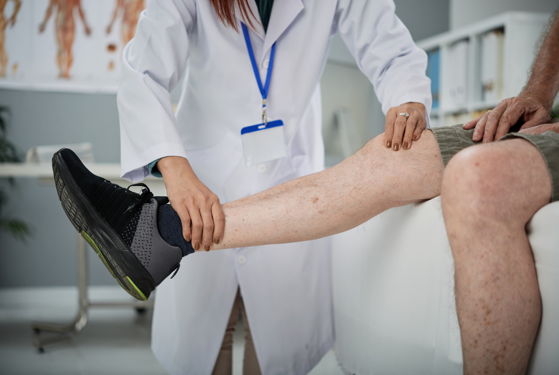

Platelet-rich plasma injection for the knee is considered to offer significant pain relief, along with improving joint function. This is effective for patients with mild-to-moderate osteoarthritis, failed conservative care, planning to avoid surgery, etc.
Key Takeaways
- Target Candidate: PRP works best for individuals with mild-to-moderate knee osteoarthritis (before total joint space loss) and active individuals looking to avoid or delay surgery.
- Secondary Line of Defense: It is typically recommended after basic conservative care (physical therapy, weight management, oral medications) fails to provide long-term relief.
- Exclusion Criteria: Patients who have extreme cases of “bone-on-bone” osteoarthritis, are currently suffering from infections, have low platelet counts, suffer from bleeding disorders, or have systemic illnesses are not suitable candidates.
- Realistic Expectations: Results develop progressively over weeks to months, requiring patient health considerations like non-smoking status and normal platelet function for optimal efficacy.
Mainly driven by osteoarthritis, chronic knee pain mainly occurs due to progressive cartilage breakdown and chronic joint inflammation. As OTC medications focus on symptom suppression, regenerative treatments prioritize biological tissue healing and joint preservation.
The platelet-rich plasma (PRP) therapy is considered for knee pain as it promotes tissue healing. Before you opt for a PRP injection, you need to understand whether you are a suitable fit for it. In this article, we will talk about who is an ideal candidate for this treatment procedure.
What is a Platelet-Rich Plasma Knee Injection?
A platelet-rich plasma injection (injection de plasma) for the knee refers to an invasive treatment where a concentrated dose of a patient’s own blood platelets is used to minimize pain, lower inflammation, and stimulate tissue healing in the knee joint. You do not have any risks of an allergic reaction since your own blood is used.
Referring to the procedure, a blood sample (typically 25 to 120 ml) is drawn from the patient’s arm and is placed in a centrifuge machine. The blood is spun to separate red and white blood cells from the plasma and platelets. The platelets are packed with healing factors like PDGF, IGF, and TGF-β and the concentrated solution is injected to the knee.
Who is a Suitable Candidate for Platelet-Rich Plasma (PRP) Knee Injection?
The PRP knee injection is the right choice for the following individuals.
Mild to Moderate Osteoarthritis
PRP therapy is a good non-surgical option for patients dealing with mild to moderate osteoarthritis. A key reason behind this is that this therapy offers good results before total joint space loss occurs.
By offering concentrated platelets and growth factors to the joint, this therapy minimizes pain and lowers inflammation. Also, the cellular health of the cartilage improves because of the growth factors. This delays or rules out the need for total knee replacement.
Failed Conservative Care
PRP injections are not the first line of treatment for knee pain. What are mainly considered initially are lifestyle modifications (like weight management and low-impact exercise), oral anti-inflammatories, physical therapy, etc. If these treatments fail to offer positive outcomes, the plasma platelet knee injection is recommended.
When you decide to go for conservative care, you seek pain relief for at least 6 to 12 months. If they fail to provide that, you should look for alternatives. The PRP therapy is a good option here as it offers adequate relief for the stated timeframe.
See also: Why Real-Time Construction Progress Tracking Is Your Best Defense in Construction Dispute Services
Choice to Avoid Surgery
Not everyone is ready for knee surgery at a specific moment. Or, if you need to delay the procedure, PRP is a good choice. This relieves pain, minimizes inflammation, and delays a potential surgery.
Patient Health Profile and Lifestyle Factors
A healthy person is ideal for the platelet-rich plasma injection (injection de plasma) in the knee. The key considerations include:
- Non-smokers
- Patients with systemic platelet function and balanced immune activity
- Athletes
PRP injections work progressively over weeks to months. This procedure does not deliver instant results. If you are aware of the working procedure and expect what actually can be obtained, you can go for this one.
Who is Not an Ideal Candidate for PRP Injections?
The plasma platelet knee injection is not a healthy choice for you if you are dealing with:
- Severe osteoarthritis because of the complete loss of joint space
- Active systemic infections
- Hematologic disorders (like severe anemia, low platelet count, etc.)
- Active cancer or systemic illness
You must provide a detailed medical history to your physician to understand whether you are a suitable candidate for PRP injections.
Conclusion
You are a good candidate for PRP injection if you are dealing with mild-to-moderate osteoarthritis, experiencing the pain after conservative treatment, or thinking of delaying surgery. All you need is an expert consultation to obtain adequate knowledge on this area.
Dealing with Unbearable Knee Pain?
Find a renowned pain management clinic near you. Book an appointment and understand whether you are the right candidate for knee PRP injections. Get it administered and ensure a temporary pain relief.